12 Effective Direct Marketing Techniques for Small Businesses

Mitch Wilder
Entrepreneur & Systems Thinker
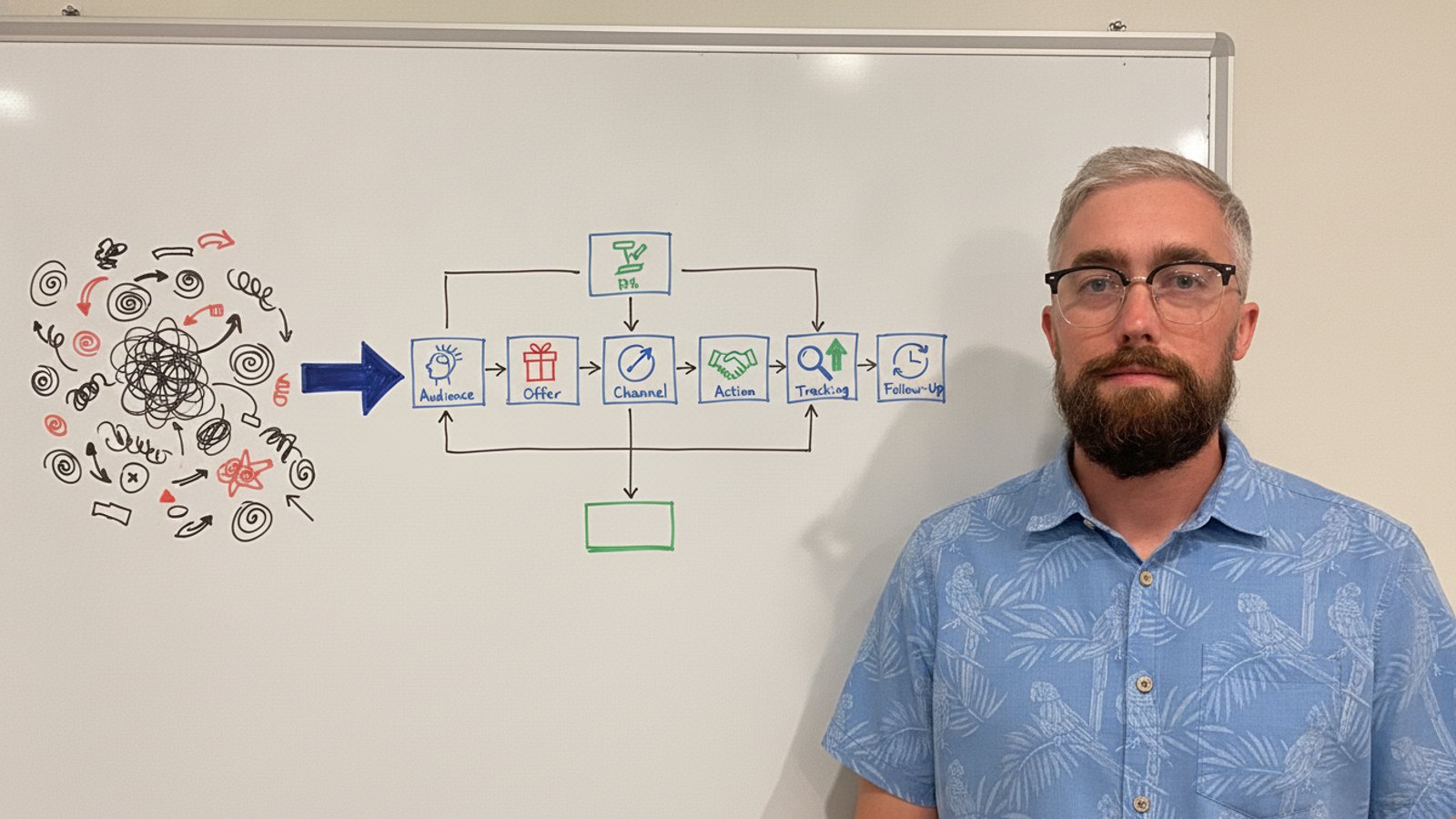
Most small businesses do not struggle because they lack marketing ideas. They struggle because their marketing is too random. One week it is social media. The next week it is a discount, an ad, a referral ask, or an email blast. Nothing connects, nothing is measured, and no one really knows what is driving customers.
That is where direct marketing changes the game.
I think the way that I look at it is simple: direct marketing gives you a clear way to reach a specific person, make a specific offer, and ask for a specific action. More importantly, you can track what happened and improve from there.
Quick answer
Direct marketing techniques are methods that reach a specific audience directly and ask for a measurable response — email, direct mail, SMS, cold outreach, LinkedIn, referrals, retargeting ads, landing pages, lead magnets, reactivation, phone calls, and events. The best results come from choosing one audience, one problem, one offer, and one channel, then following up and tracking the response.
Key Takeaways
- Direct marketing techniques are methods that reach a specific audience directly and ask for a measurable response.
- The best direct marketing for small businesses is focused, trackable, and tied to one clear offer.
- Strong options include email marketing, direct mail, SMS, cold outreach, referral campaigns, retargeting ads, and phone calls.
- Direct marketing works best when you choose one audience, one problem, one offer, and one channel.
- A campaign is not complete without follow-up and tracking.
- The right channel depends on your audience, price point, buying cycle, and ability to measure ROI.
- Small businesses should use direct marketing as a system for customer acquisition, not a random set of tactics.
What Are Direct Marketing Techniques?
Direct marketing techniques are marketing methods that allow a business to communicate directly with a defined audience and ask for a measurable response.
That response could be:
- Booking a call
- Requesting a quote
- Clicking a landing page
- Redeeming an offer
- Joining an email list
- Replying to a message
- Scheduling an appointment
- Making a purchase
In other words, direct marketing is not about visibility alone. It is about response. Brand awareness asks, “Did people see us?” Direct marketing asks, “Did the right people take action?”
Free checklist
The 30-Minute Small Business Marketing Plan Checklist
Build a usable one-page marketing plan in about 30 minutes. Eight short sections walk you from a clear goal to a 90-day action plan, with fill-in formulas along the way.
Get the checklistWhy Direct Marketing Matters for Small Businesses
Direct marketing matters because small businesses do not have unlimited time or budget. You need marketing that creates a straight line between activity and revenue.
Done well, direct marketing helps you:
- Reach specific prospects instead of everyone
- Control spend more carefully
- Test offers fast
- Generate leads and appointments
- Follow up with warm prospects
- Improve customer retention
- Track performance and ROI
My point is this: if your marketing feels vague, direct marketing forces clarity. You have to know who you want, what problem they have, what you are offering, and what action you want them to take. This is the same discipline behind a good small business marketing plan — direct marketing is how you put that plan into motion.
Direct Marketing vs. Indirect Marketing
Both matter, but they do different jobs.
| Type | Examples | Main Goal |
|---|---|---|
| Direct marketing | Email, direct mail, SMS, cold outreach, retargeting ads, phone calls, landing pages | Generate a measurable response |
| Indirect marketing | SEO, organic social media, PR, podcasts, educational content, community building | Build trust, visibility, and authority over time |
I think a lot of businesses make the mistake of choosing one side. That is the wrong frame. Indirect marketing builds awareness. Direct marketing converts that awareness into leads, conversations, and sales.
The Foundation of Effective Direct Marketing
Before you choose channels, you need the basics in place.
1. Know Your Target Audience
Direct marketing fails when it is aimed at everyone.
A local accountant should not send the same message to a startup founder, a real estate investor, and a contractor. They all need accounting help, but they care about different outcomes.
You need to know:
- Who they are
- What problem they want solved
- What triggers them to act
- Where they spend time
- What stage of awareness they are in
2. Make a Specific Offer
“We can help” is not an offer.
A real offer is concrete:
- Free consultation
- Free estimate
- Buyer’s guide
- Limited-time package
- Referral bonus
- Free audit
- First-time customer discount
Specific offers outperform vague promises because they reduce friction.
3. Use One Clear Call to Action
Weak CTAs create weak campaigns.
Use action-driven CTAs like:
- Book your free 15-minute consultation
- Get your custom quote
- Download the checklist
- Reply YES for details
- Claim the offer before Friday
4. Track the Response
One of the things that I noticed is that small businesses often skip the measurement part and then wonder why marketing feels like gambling.
Track sends, opens, clicks, replies, calls, bookings, sales, cost per lead, cost per sale, revenue, and ROI.
5. Follow Up
Most campaigns do not fail because the first message was terrible. They fail because there was no follow-up.
That follow-up could be an email sequence, a text reminder, a phone call, a retargeting ad, a second postcard, or a referral reminder.
12 Effective Direct Marketing Techniques
Here are the direct marketing techniques I would start with if I wanted practical, measurable growth.
1. Email Marketing Campaigns
Email is one of the most effective direct marketing techniques for small businesses because it is low cost, easy to personalize, and highly trackable. It is also the channel with the most provable return — email drives an average of $36 for every $1 spent (Litmus), higher than any other channel.
Best for: lead nurturing, promotions, customer reactivation, post-purchase follow-up, and referral campaigns.
Example: A home service company emails past customers about a seasonal maintenance package.
Rule: Choose email when you already have a list and want repeatable communication.
2. Direct Mail Campaigns
Direct mail still works, especially for local businesses and high-value services. In a digital-first world, physical mail often gets more attention simply because there is less competition in the mailbox. The numbers hold up, too: response rates run around 5.3% for house lists versus 2.9% for prospect lists (ANA/DMA Response Rate Report), ahead of most digital channels.
Best for: local promotions, new mover campaigns, real estate, dental, medical, and home services, and neighborhood offers.
Example: A dental office mails postcards to nearby households with a new patient offer.
Rule: Do not send one postcard once and decide the channel failed. Direct mail often needs repetition.
3. SMS Marketing
SMS is fast, direct, and ideal for urgent or timely communication.
Best for: appointment reminders, flash sales, event reminders, reactivation offers, and service reminders.
Example: A fitness studio texts inactive members with a limited-time comeback offer.
Rule: Use SMS for immediacy. Do not overuse it or trust drops fast.
4. Cold Email Outreach
Cold email works well in B2B when the audience is narrow and the message is relevant.
Best for: agencies, consultants, SaaS demos, partnerships, and outbound lead generation.
Example: A web design firm emails local businesses with outdated websites and offers a homepage audit.
Rule: Personalization beats volume. Plain and simple.
5. LinkedIn Outreach
LinkedIn is a direct marketing channel disguised as networking. For B2B businesses, that matters.
Best for: professional services, consulting, partnerships, recruiting, and B2B lead generation.
Example: A consultant connects with owners in a niche, engages with their posts, then starts a conversation around a free growth assessment.
Rule: Start with credibility, not a pitch.
6. Referral Campaigns
Referral marketing is powerful because trust is borrowed from the person making the introduction.
Best for: consultants, agencies, local services, financial services, and legal and professional services.
Example: Instead of saying, “Let me know if you know anyone,” ask, “Do you know any owner trying to grow without a clear marketing plan?”
Rule: Specific referral asks outperform generic ones every time.
7. Retargeting Ads
Retargeting helps you stay in front of warm prospects who already showed interest.
Best for: website visitors, cart abandoners, demo page visitors, webinar registrants, and pricing page traffic.
Example: A software company retargets users who visited the pricing page but did not book a demo.
Rule: Match the message to behavior. A blog visitor and a pricing-page visitor are not the same.
8. Landing Page Campaigns
A landing page gives a campaign one destination and one job.
Best for: paid ads, direct mail traffic, email campaigns, webinar signups, and free consultation offers.
Example: A contractor sends postcard traffic to a page for a seasonal inspection offer.
Rule: Do not send campaign traffic to the homepage if the homepage is broad and distracting.
9. Lead Magnet Campaigns
Lead magnets work when the buying cycle is longer and trust needs to be built first.
Best for: consultants, agencies, B2B services, high-ticket offers, and education-based selling.
Example: A checklist, template, buyer’s guide, ROI calculator, free audit, or webinar.
Rule: Choose a lead magnet that attracts likely buyers, not just curious people.
10. Customer Reactivation Campaigns
It is often easier to sell to people who already know you than to win a brand-new prospect.
Best for: past customers, inactive leads, expired memberships, former clients, and unclosed estimates.
Example: A salon sends a “We miss you” offer to customers who have not booked in six months.
Rule: Before chasing more leads, mine the database you already have.
11. Phone Call Campaigns
Phone calls are still one of the fastest ways to move high-intent leads forward.
Best for: inbound lead follow-up, high-ticket services, quote requests, event follow-up, and past customer outreach.
Example: A contractor calls homeowners who requested estimates but never booked.
Rule: Use calls to help and clarify, not pressure.
12. Event-Based Direct Marketing
Events create urgency and give people a reason to engage now.
Best for: workshops, webinars, open houses, demos, and educational selling.
Example: A financial planner hosts a workshop on reducing tax surprises for small business owners.
Rule: The event is not the finish line. The follow-up is where a lot of the revenue happens.
How to Choose the Right Direct Marketing Technique
If you feel overwhelmed, use this five-part filter.
1. Who Are You Trying to Reach?
- Consumers: direct mail, SMS, email, local promotions, retargeting
- Businesses: cold email, LinkedIn outreach, webinars, referrals, sales calls
2. How Expensive Is Your Offer?
- Low-ticket: simple messaging, fast action, higher volume
- High-ticket: more education, more trust, more follow-up
3. How Long Is the Buying Cycle?
- Short cycle: SMS, direct mail, promo emails, retargeting
- Long cycle: lead magnets, nurture emails, webinars, calls
4. Do You Already Have an Audience?
- Yes: email, reactivation, customer offers, referrals
- No: cold outreach, paid traffic, partnerships, targeted direct mail
5. Can You Track the Result?
If you cannot measure it, simplify it. Use landing pages, UTM links, tracking numbers, CRM tags, QR codes, and campaign-specific forms.
How to Create a Simple Direct Marketing Campaign
Here is a clean seven-step process.
- Pick one audience. Start narrow. Past customers, local homeowners, email subscribers, website visitors, or referral partners are all fine.
- Choose one problem. Focus on one urgent issue they already care about.
- Create one offer. Make it easy to understand and easy to act on.
- Choose one channel. Do not launch six channels at once. Start with one.
- Write one clear message. Use this formula: problem + desired outcome + offer + CTA.
- Build follow-up. A simple sequence: Day 1 initial message, Day 3 reminder, Day 7 proof or testimonial, Day 10 final reminder, Day 14 softer follow-up.
- Measure results. Track response, bookings, sales, cost, and ROI.
Here is what that message formula looks like in practice: “Still trying to turn website visitors into leads? Get a free homepage audit and see the three changes that could help more visitors become customers. Book your free audit here.”
How to Measure Direct Marketing ROI
The basic formula is:
ROI = (Revenue from campaign − Campaign cost) / Campaign cost
If you spend $1,000 and generate $5,000 in sales, your profit before other costs is $4,000, so $4,000 / $1,000 = 4, or a 400% ROI.
Also track cost per lead, cost per appointment, cost per sale, conversion rate, average order value, lifetime value, response rate, and repeat purchase rate.
One important nuance: not every campaign should be judged only on immediate sales. Some are designed to generate leads, start conversations, or grow the database. That is fine, as long as you know the goal before you launch.
Common Direct Marketing Mistakes to Avoid
The biggest mistakes are usually simple:
- Targeting too broad an audience
- Making a vague offer
- Using too many channels at once
- Failing to follow up
- Not tracking results
- Sounding overly salesy
- Copying competitors without strategy
- Giving up too early
I think this is where most wasted budget comes from. Not from bad tools, but from bad discipline.
Best Direct Marketing Channels for Small Businesses
| Channel | Best For | Cost Level | Speed | Trackability |
|---|---|---|---|---|
| Leads and customers | Low | Medium | High | |
| SMS | Timely offers and reminders | Low-Medium | Fast | High |
| Direct Mail | Local targeted offers | Medium | Medium | Medium-High |
| Cold Email | B2B outreach | Low | Medium | High |
| B2B relationships | Low | Medium | Medium | |
| Retargeting Ads | Warm prospects | Medium | Fast | High |
| Phone Calls | High-intent leads | Low-Medium | Fast | High |
| Webinars | Education-based selling | Medium | Medium | High |
| Referral Campaigns | Trust-based growth | Low | Medium | Medium |
Frequently Asked Questions About Direct Marketing Techniques
What is the most effective direct marketing technique?
It depends on your audience and offer, but email marketing is often the best starting point because it is affordable, flexible, and trackable.
Is direct mail still effective?
Yes. Direct mail still works when it is targeted, offer-driven, and measured. It is especially strong for local businesses and higher-value services.
What is an example of direct marketing?
A local HVAC company mailing homeowners an air conditioning tune-up offer with a QR code to schedule an appointment is a direct marketing example.
What is the difference between direct marketing and digital marketing?
Direct marketing is about reaching a specific audience and asking for a measurable response. Digital marketing is broader and refers to online marketing channels. Some digital tactics, like email and retargeting, are also direct marketing.
How often should small businesses use direct marketing?
Consistently. A good starting point is one focused campaign per month with clear follow-up and review.
What makes a direct marketing campaign successful?
A direct marketing campaign succeeds when it focuses on one audience, one problem, one clear offer, and one channel, then follows up consistently and tracks the response so you can measure ROI and improve.
Final Thoughts
Direct marketing works best when it is focused.
You do not need every channel. You do not need more random tactics. You need one audience, one offer, one message, one action, and one way to measure the result.
That is the takeaway. Stop trying to do more marketing. Start building a better marketing system. If your marketing feels scattered right now, begin small. Pick one direct marketing campaign, launch it, follow up hard, track the numbers, and improve it. That is how direct marketing turns from a tactic into a repeatable growth engine.
Related Reading
- How to create a small business marketing plan — the broader system these direct marketing techniques plug into.
- The essential elements of a small business marketing plan — the components every plan should include before you launch campaigns.
- 12 marketing strategies for startups that actually work — direct-response thinking applied to early-stage growth on a tight budget.
- 10 marketing plan mistakes that waste time and money — the planning errors that quietly kill campaigns like these before they launch.