Lead Generation Strategies Every Small Business Should Know

Mitch Wilder
Entrepreneur & Systems Thinker
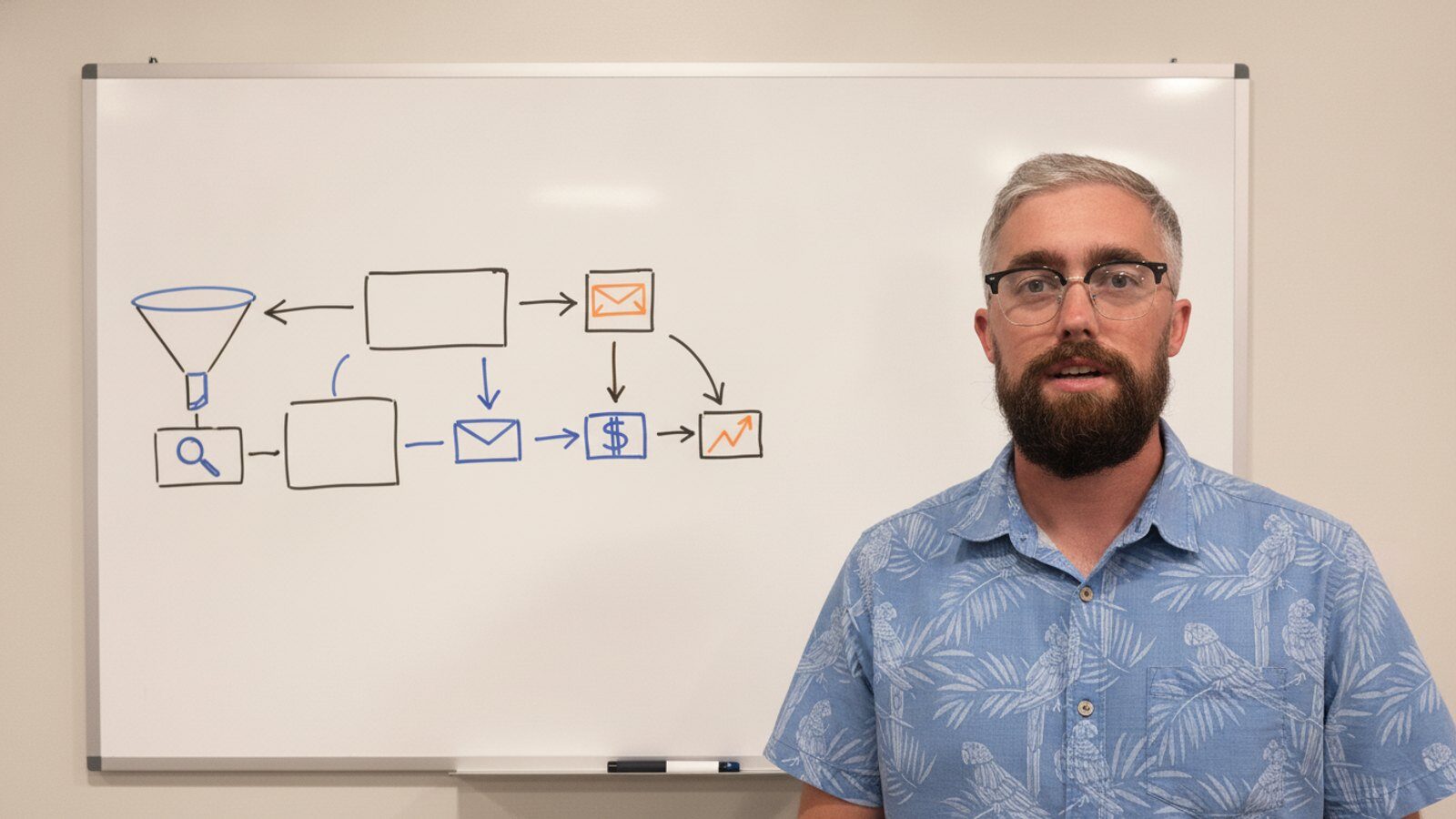
If your pipeline feels inconsistent, you probably do not have a traffic problem. You have a systems problem.
I think this is where a lot of small businesses get stuck. They rely on accidental marketing: a few referrals here, a social post there, a paid campaign when sales dip. That approach can create occasional wins, but it rarely creates predictable revenue. The way that I look at it, the goal is not to do more marketing. It is to build a simple lead generation system that attracts the right people, captures interest, follows up consistently, and shows you what is actually producing revenue.
Quick answer
The best lead generation strategies for small businesses combine six things: a clearly defined target customer, a compelling offer, one or two focused traffic sources, a simple lead capture process, fast and consistent follow-up, and clear ROI tracking. Pick one primary channel and one offer, build the follow-up system, then scale what the numbers prove is working.
Key Takeaways
- Inconsistent lead flow is usually a systems problem, not a traffic problem.
- Focus beats volume: one audience, one offer, one or two channels, one follow-up process.
- A lead is only valuable if there is a fast, consistent process to convert it.
- Track revenue by source, not vanity metrics, and double down on what actually pays.
- Inbound compounds over time; outbound creates faster opportunities. Most small businesses need both.
There is no shortage of potential customers to reach — the U.S. Small Business Administration counts over 33 million small businesses in the United States (SBA Office of Advocacy) all competing for attention. What separates the ones with full pipelines is speed and system: a classic Harvard Business Review audit found that firms that contacted leads within an hour were nearly seven times more likely to qualify them (Harvard Business Review) than those that waited even a couple of hours.
This article is part of my Customer Acquisition series. Lead generation is the attraction-and-capture stage of the bigger machine I break down in customer acquisition strategies for small business. Start here if lead flow is your bottleneck; read the pillar for the full system.
What Is Lead Generation for Small Businesses?
Lead generation is the process of attracting potential customers, capturing their contact information, and nurturing them until they are ready to buy.
In plain English, a lead is someone who has shown interest but has not purchased yet. That could be someone who filled out a form, booked a consultation, requested a quote, called from Google, or downloaded a guide.
Lead vs. Prospect vs. Customer
| Term | Meaning | Example |
|---|---|---|
| Lead | Someone who has shown interest | Downloaded a checklist |
| Prospect | A lead who fits your ideal customer profile | Requested a proposal |
| Customer | Someone who has purchased | Signed an agreement |
Inbound vs. Outbound Lead Generation
Inbound lead generation happens when people come to you through SEO, content, reviews, referrals, or search.
Outbound lead generation happens when you reach out directly through email, LinkedIn, calls, direct mail, or targeted prospecting.
Most small businesses need both. Inbound compounds over time. Outbound creates faster opportunities. Referrals and partnerships add trust to the whole system.
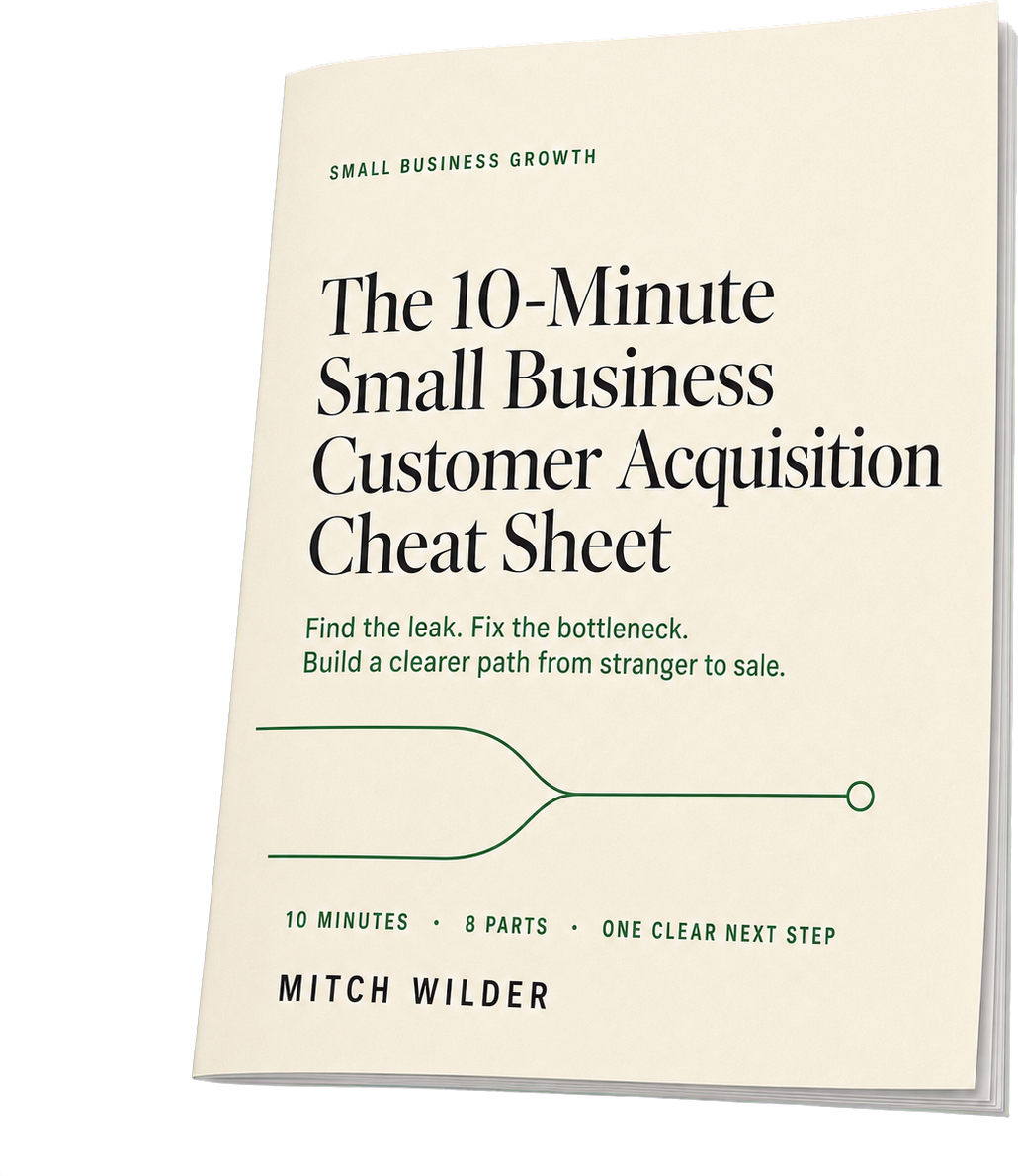
Free checklist
The 10-Minute Small Business Customer Acquisition Cheat Sheet
A printable cheat sheet and 36-point scorecard that finds the one bottleneck leaking customers, tells you what to fix first, and gives you the single metric to watch next.
Get the checklistWhy Most Small Business Lead Generation Fails
Lead generation usually fails for one simple reason: there is no system behind the tactics.
The target is too broad
If you try to market to everyone, your messaging gets vague. Your offer gets generic. Your conversion rates drop.
“Small businesses” is not a target. “Independent dental practices in suburban markets that need 20 new patient inquiries per month” is much closer to a real target.
The offer is weak
A “Contact us” button is not a strategy.
Better offers include:
- Free assessment
- Pricing guide
- Checklist
- Audit
- Demo
- Quote
- Comparison guide
- Strategy call
There is no follow-up process
One of the things that I noticed is that a lot of businesses spend money generating leads and then lose them in the handoff. Slow response times, forgotten callbacks, and inconsistent nurturing kill deal flow.
Lead generation and sales are closely intertwined. A lead is only valuable if there is a process to convert it.
They track activity instead of revenue
Vanity metrics feel productive, but they do not pay the bills.
Track metrics like:
- Leads generated
- Qualified leads
- Appointments booked
- Close rate
- Revenue by source
- Customer acquisition cost
- Lifetime value
They try too many channels at once
More channels do not automatically mean more leads. More focus usually means better leads.
The FOCUS Framework for Small Business Lead Generation
I like simple frameworks because they make execution easier. Here is one that works.
F — Find the right audience
Define who you want to attract.
Ask:
- Who is most profitable to serve?
- Who has the problem we solve best?
- Who buys quickly?
- Who has budget?
- Who refers others?
- Who should we avoid?
O — Offer something valuable
Your offer should solve a specific, painful problem.
Examples:
- Free 15-minute growth audit
- Website conversion checklist
- Get a quote in 24 hours
- ROI calculator
- Book a demo
- Local SEO score
C — Capture the lead
Every traffic source needs a conversion point.
Common lead capture methods:
- Website forms
- Landing pages
- Click-to-call buttons
- Booking calendars
- Email opt-ins
- Webinar registrations
- Chat widgets
U — Use consistent follow-up
Most small businesses do not need complicated automation. They need reliable follow-up.
Use:
- Phone
- SMS
- CRM tasks
- Retargeting
- Sales sequences
S — Study the numbers
If you cannot measure it, you cannot improve it.
Track:
- Lead source
- Cost per lead
- Conversion rate
- Close rate
- Revenue generated
- Time to close
- ROI
15 Lead Generation Strategies Every Small Business Should Know
1. Define your ideal customer before choosing any tactic
The first strategy is not a channel. It is focus.
A clear customer profile improves your messaging, your offer, your ad targeting, your content, and your sales conversations. My point is this: better targeting usually creates better leads faster than adding another marketing platform.
2. Turn your website into a lead capture machine
Your website should convert, not just explain.
At a minimum, every important page should have:
- A clear headline
- A specific outcome
- A strong CTA
- A simple form
- Testimonials or case studies
- Mobile-friendly design
- FAQ section
- Click-to-call or booking option
Instead of “Contact us,” test stronger CTAs like “Get a free quote,” “Book your strategy call,” or “Request your audit.”
3. Use local SEO and Google Business Profile
For local lead generation, this is one of the highest-leverage moves you can make.
If someone searches “accountant near me” or “emergency plumber Dallas,” that person often has strong buying intent. Claim your Google Business Profile, choose the right categories, add services, upload photos, collect reviews, and link to a relevant landing page.
4. Create content that answers buyer questions
Content works when it answers the questions prospects ask before they buy.
Good content topics include:
- How-to guides
- Cost articles
- Comparison posts
- Buyer’s guides
- Mistake articles
- Case studies
- Checklists
- Templates
A consultant might publish an article on how to measure marketing ROI. A local service business might publish “How Much Does Roof Repair Cost in Austin?” That is the difference between traffic content and buying-intent content.
5. Build lead magnets that solve one specific problem
A lead magnet is a free resource offered in exchange for contact information.
Good lead magnet ideas include:
- Checklists
- Templates
- Calculators
- Audits
- Quizzes
- Guides
- Scorecards
Here is a simple rule: if the lead magnet is too broad, it usually underperforms. A “marketing newsletter” is weak. A “one-page small business lead generation plan template” is much stronger.
6. Use dedicated landing pages
Landing pages convert better than generic homepages because they stay focused on one offer.
A solid landing page includes:
- Clear headline
- Problem statement
- Offer details
- Benefits
- Social proof
- Simple form
- FAQs
- Trust signals
Choose this approach when you are running ads, promoting a lead magnet, or sending people from email or social.
7. Build an email follow-up sequence
Most leads are not ready to buy immediately. Email helps you stay visible and build trust.
A simple 5-email sequence looks like this:
- Deliver the promised resource
- Explain the problem
- Teach a useful concept
- Share proof
- Present the next step
The takeaway is that email should continue the conversation, not just push for a sale.
8. Use a CRM to track every lead
If your leads live in your inbox, your memory, and three spreadsheets, leads will get lost. Plain and simple.
A CRM helps you organize leads, manage follow-up, and track pipeline stages like:
- New lead
- Contacted
- Qualified
- Appointment booked
- Proposal sent
- Won
- Lost
Start simple. HubSpot, Pipedrive, and Zoho are common choices for small teams.
9. Create a referral system
Word of mouth is powerful, but waiting for it passively is a mistake.
Word of mouth may be the business equivalent of a free lunch, but only if you make it easy for people to refer you.
Ask at the right time, give people language they can use, thank them quickly, and track referrals in your CRM.
10. Build strategic partnerships
Partnerships work because they borrow trust from businesses that already serve your audience.
Good partners might include:
- Accountants
- Web designers
- Attorneys
- Coaches
- IT consultants
- Financial planners
- Industry associations
If you serve the same customer from a different angle, there is often partnership potential.
11. Use LinkedIn and social media for targeted outreach
Social media lead generation works better when it is built around conversations, not just posting.
For B2B, LinkedIn is often the best starting point. Connect with the right people, engage with their content, ask useful questions, and offer something relevant before asking for a call.
12. Run paid search ads for high-intent leads
Paid search is powerful because it targets people already looking for a solution.
This is especially useful for:
- Local services
- Emergency services
- Professional services
- B2B services
- High-ticket offers
Use dedicated landing pages, track calls and form fills, add negative keywords, and measure revenue, not just clicks.
13. Use retargeting
Most visitors will not convert on the first visit. Retargeting brings them back.
You can retarget:
- Website visitors
- Pricing page visitors
- Blog readers
- Video viewers
- Abandoned cart users
- Past leads
Do not show the same generic ad to everyone. Match the message to what they viewed.
14. Host webinars, workshops, or live events
Educational events let prospects experience your expertise before they buy.
This works especially well for consultants, agencies, coaches, SaaS teams, and professional services. Pick a specific topic, create a registration page, deliver useful training, and make a clear next-step offer.
15. Improve reviews, testimonials, and case studies
Social proof turns interest into trust.
Ask for testimonials that speak to results, not just satisfaction. Instead of “They were great to work with,” you want something more specific: the problem, what changed, and the outcome. Once leads become customers, the same trust-building work powers retention — I cover that side in strategies to increase customer retention.
Best Lead Generation Strategies by Business Type
Not every strategy fits every business. Right?
| Business Type | Best Primary Strategy | Supporting Strategy | Best Offer | Key Metric |
|---|---|---|---|---|
| Local service business | Local SEO | Google Ads | Free estimate | Calls booked |
| B2B service provider | LinkedIn outreach | Content marketing | Strategy call | Qualified appointments |
| E-commerce brand | Paid social | Email capture | Discount or quiz | Email opt-ins |
| Consultant or coach | Educational content | Webinars | Diagnostic call | Calls booked |
| Professional service firm | SEO | Referrals | Consultation | Qualified inquiries |
| SaaS startup | Content marketing | Product demos | Free trial/demo | Demo requests |
A plumber and a B2B consultant should not use the same playbook. That sounds obvious, but a lot of marketing advice ignores it.
How to Choose the Right Lead Generation Strategy for Your Business
The best strategy depends on your audience, your offer, your budget, and your sales cycle.
I recommend using a simple score from 1 to 5 for each option based on:
- Buyer intent
- Speed to results
- Cost
- Ease of execution
- Scalability
- Fit with your audience
- Ability to track ROI
The 90-day focus rule
For the next 90 days, choose:
- One primary channel
- One secondary channel
- One lead magnet or offer
- One follow-up process
- One dashboard
For example, a B2B consultant might choose LinkedIn outreach as the primary channel, SEO articles as the secondary channel, a free growth audit as the offer, and a 5-email sequence plus CRM follow-up as the system.
How to Create a Simple Lead Generation System
If you only do one thing from this article, build this.
- Define the audience — Choose one clear customer segment.
- Choose one problem — Focus on the most urgent pain point they want solved.
- Create one offer — Use a quote, consultation, checklist, demo, audit, or guide.
- Choose one or two traffic sources — SEO, local SEO, LinkedIn, Google Ads, referrals, email, or partnerships.
- Build a capture point — Landing page, website form, booking calendar, phone number, or webinar registration.
- Follow up consistently — Immediate response, nurture sequence, reminders, and sales follow-up.
- Track source to sale — Know where the lead came from, what it cost, and whether it turned into revenue.
In other words: Audience → Offer → Traffic → Capture → Follow-Up → Sale → Measurement
How to Measure Lead Generation ROI
Lead generation without measurement is just expensive guessing.
| Metric | Formula | Why It Matters |
|---|---|---|
| Website conversion rate | Leads ÷ visitors × 100 | Shows how well your site converts |
| Cost per lead | Spend ÷ leads | Shows efficiency |
| Qualified lead rate | Qualified leads ÷ total leads × 100 | Shows lead quality |
| Appointment rate | Appointments ÷ leads × 100 | Shows follow-up strength |
| Close rate | Customers ÷ qualified leads × 100 | Shows sales effectiveness |
| Customer acquisition cost | Sales and marketing cost ÷ new customers | Shows cost to acquire a customer |
| ROI | (Revenue from leads − cost) ÷ cost × 100 | Shows profitability |
Simple ROI example
Let’s say you spend $1,000 on lead generation.
- 50 leads come in
- Cost per lead is $20
- 20 are qualified
- 5 become customers
- Average customer value is $800
- Revenue is $4,000
That is a 300% ROI.
The exact numbers will vary. The important part is knowing the math and tracking it consistently. If you want the full measurement system, read how to measure marketing ROI and stop wasting money on campaigns.
How to Turn More Leads Into Customers
Lead generation is only half the battle. Follow-up is where a lot of revenue is won or lost.
Respond quickly. Use multiple touchpoints. And stop trying to force the sale before you understand the problem.
Discovery questions I like include:
- What prompted you to reach out now?
- What have you already tried?
- What is this costing you?
- What would success look like?
- What timeline are you working with?
- How will you decide?
If you want someone to buy, stop selling. Diagnose better.
Lead Generation Tools Small Businesses Actually Need
A small business does not need 20 tools. It needs a few tools that support the process.
| Tool Category | Purpose | Examples |
|---|---|---|
| Analytics | Understand traffic and conversions | Google Analytics, Search Console |
| CRM | Track leads and follow-up | HubSpot, Pipedrive, Zoho |
| Email marketing | Nurture leads | Mailchimp, ActiveCampaign, ConvertKit |
| Landing pages | Capture leads | Leadpages, Unbounce, Webflow |
| Scheduling | Book calls | Calendly, SavvyCal |
| Forms | Collect lead info | Typeform, Jotform, Gravity Forms |
| Call tracking | Track phone leads | CallRail, WhatConverts |
Start simple. Buy software after the strategy is clear, not before.
Common Lead Generation Mistakes Small Businesses Should Avoid
Avoid these and your odds improve fast:
- Chasing every tactic
- Targeting everyone
- Sending traffic to weak pages
- Not following up
- Ignoring lead quality
- Not tracking ROI
- Giving up too soon
- Overcomplicating the system
A simple system executed consistently beats a complex system nobody uses.
A 90-Day Lead Generation Plan for Small Businesses
Days 1–30: Build the foundation
- Define your ideal customer
- Choose one offer
- Set up a CRM
- Create a landing page
- Add tracking
- Improve website CTAs
- Optimize Google Business Profile
- Build a basic follow-up sequence
Days 31–60: Launch and test
- Publish 2 to 4 buyer-intent content pieces
- Start a referral or outreach campaign
- Launch a small ad test if it fits
- Ask for reviews
- Contact potential partners
- Track source and lead quality
Days 61–90: Optimize and scale
- Review cost per lead
- Review close rate
- Improve follow-up
- Increase budget on profitable channels
- Stop weak channels
- Add one new lead magnet
- Expand partnerships
- Document the process
Frequently Asked Questions About Lead Generation for Small Businesses
What is the best lead generation strategy for small businesses?
The best strategy is the one that matches your audience, offer, budget, and sales process. For many businesses, strong starting points are local SEO, website optimization, referrals, content, and targeted outreach.
How do small businesses generate leads without spending a lot of money?
Focus on low-cost channels like referrals, local SEO, helpful content, partnerships, customer reviews, and email follow-up. These take effort, but they usually cost less than paid acquisition.
How do you create a lead generation system?
Define your ideal customer, choose one offer, pick one or two traffic sources, create a lead capture point, set up follow-up, and track every lead from source to sale.
What is the difference between lead generation and sales?
Lead generation attracts and captures interest. Sales converts qualified leads into customers. They are different functions, but they are tightly connected.
Can AI help with lead generation?
Yes. AI can help you brainstorm lead magnets, write email drafts, analyze customer pain points, and repurpose content. But strategy, positioning, and human follow-up still matter most.
Final Thoughts: Stop Chasing Leads and Build a System
The best lead generation strategies for small businesses are not random tactics stitched together when revenue gets tight. They are parts of a focused system.
Start with one audience, one offer, one channel, and one follow-up process. Track what happens. Improve what works. Cut what does not. That is how small business lead generation becomes predictable instead of stressful.
And remember: lead generation is one stage of a bigger machine. For the complete picture — from first touch to loyal repeat customer — start with the complete guide to customer acquisition strategies for small business.
Related Reading
- Customer acquisition strategies for small business — the full system this lead generation engine plugs into.
- Proven ways to attract new customers — the attention-and-trust side of filling your pipeline.
- How to measure marketing ROI — the scoreboard that tells you which lead sources deserve more budget.