Digital Advertising Success: The P.R.O.F.I.T. Framework

Mitch Wilder
Entrepreneur & Systems Thinker
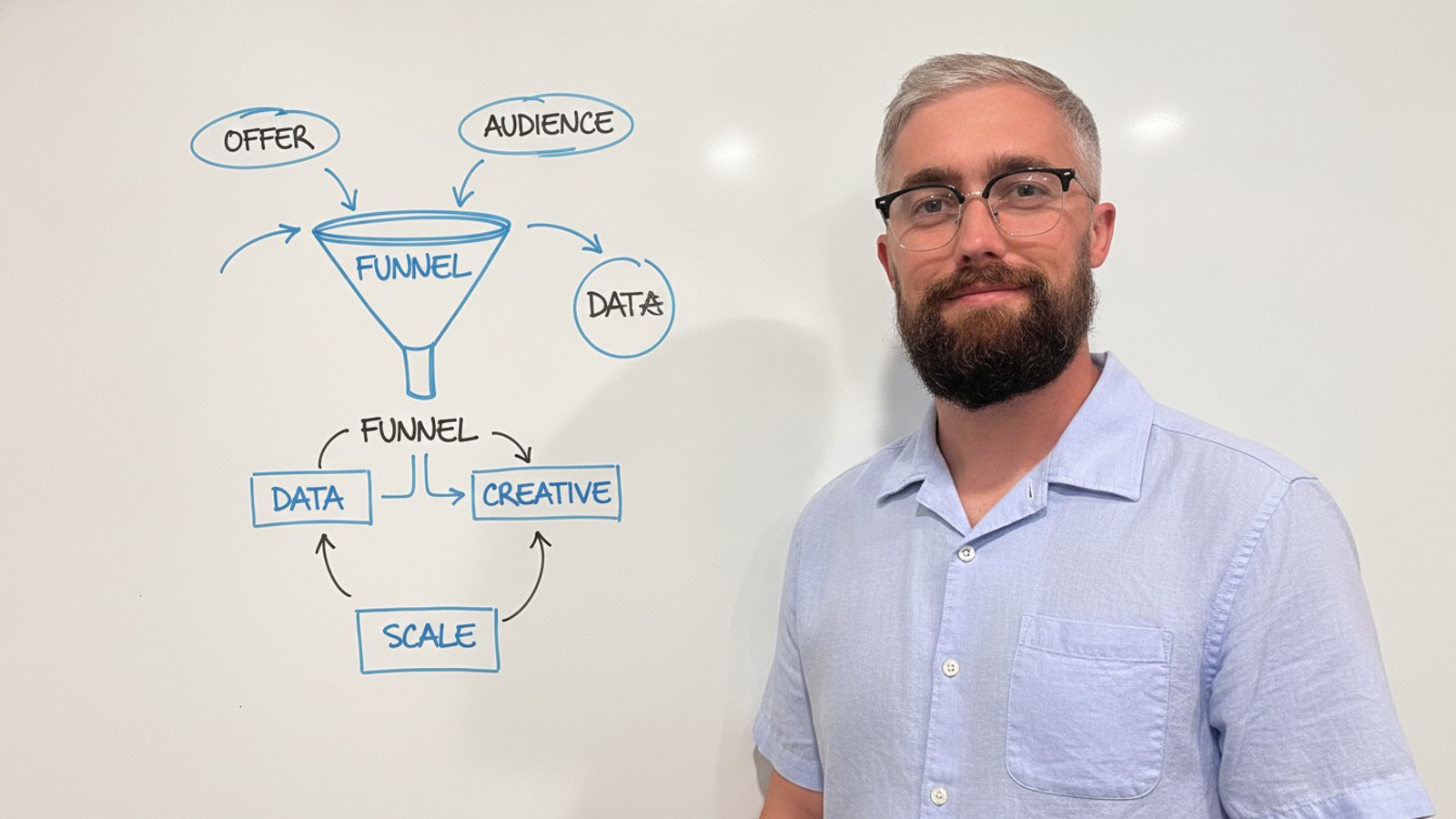
If you are spending money on ads and not getting qualified leads, booked calls, or profitable customers, you do not have an ad problem. You have a system problem.
I think that is the biggest misunderstanding in paid media right now. Digital advertising success is not about getting more clicks. It is about building a predictable system that turns ad spend into leads, pipeline, and revenue.
Quick answer
Digital advertising success means generating qualified leads or customers at a profitable cost, not just impressions or clicks. Most campaigns fail because businesses launch ads before fixing the offer, audience, funnel, tracking, and follow-up. The P.R.O.F.I.T. framework fixes that.
Key Takeaways
- Digital advertising success means profitable outcomes, not impressions or clicks.
- Most campaigns fail because ads launch before the offer, audience, funnel, tracking, and follow-up are ready.
- The P.R.O.F.I.T. framework simplifies what actually drives performance.
- P is position the offer, R is reach the right audience, O is optimize the funnel.
- F is follow the data, I is improve creative and messaging, T is test, scale, and systemize.
- If your marketing calendar is full but your pipeline is empty, you need strategy before more channels.
What is digital advertising success?
Digital advertising success means using paid channels to generate measurable business outcomes at a cost that makes financial sense. In other words, the campaign needs to produce leads, sales opportunities, customers, or revenue, not just traffic.
That distinction matters. A campaign with a low cost per click can still be a bad campaign if the leads are unqualified or the sales never happen.
What success actually looks like
A successful digital advertising campaign usually produces qualified leads, a predictable cost per acquisition, strong landing page conversion rates, clear attribution, positive return on ad spend, traceable revenue, and a repeatable path to scale.
What it does not look like
A campaign is not successful when clicks are up but sales are flat, leads are cheap but low quality, spend rises faster than revenue, the sales team rejects the leads, or nobody knows which campaigns are working. My point is this: if the ad platform says performance is great but your business says otherwise, trust the business.
Why most digital ad campaigns fail
Most digital ad campaigns fail because people treat ads like the strategy. They are not. Ads are distribution.
The way that I look at it, paid media magnifies whatever already exists. If your offer is weak, ads expose it faster. If your landing page is confusing, ads send more people into the confusion. If your follow-up is slow, ads simply create more missed opportunities. That is not a small problem given how much rides on paid channels: paid advertising remains one of the most-used and highest-budget marketing channels for businesses (HubSpot marketing statistics), so wasted spend compounds fast.
Common failure patterns
| Symptom | What it usually means | First fix |
|---|---|---|
| High clicks, low conversions | Weak landing page or poor offer match | Improve page-message alignment |
| Cheap leads, poor quality | Broad targeting or weak qualification | Tighten audience and form filters |
| High cost per lead | Weak offer or low conversion rate | Test a more compelling offer |
| Inconsistent results | Creative fatigue or unstable funnel | Refresh creative and fix funnel leaks |
| No idea what works | Broken tracking | Clean up events, UTMs, and CRM attribution |
The biggest mistakes I see
- Running ads without a clear offer
- Sending traffic to a homepage
- Targeting everyone
- Measuring clicks instead of pipeline
- Launching without conversion tracking
- Changing campaigns too fast
- Scaling before economics are proven
- Ignoring lead follow-up
- Using generic messaging
- Expecting ads to fix a weak sales process
I have watched founders waste effort on too many channels before understanding the customer and funnel. One founder runs paid ads, posts on LinkedIn, starts a blog, hires a freelancer, experiments with email, and still has no consistent pipeline. The issue is almost never effort alone. It is unfocused effort, because paid media fails when founders treat channels as the strategy instead of starting with the customer, the message, and the funnel. If you want the wider system view, see my guide to marketing frameworks that actually work.
The P.R.O.F.I.T. framework for digital advertising success
This is the framework I use to simplify digital advertising success. There are a lot of moving parts in paid media, but most performance issues can be traced back to one of these six areas.
P, Position the offer
Your offer is the engine of the campaign. If people do not care about the thing behind the click, the ad will struggle no matter how good the targeting is. A strong offer answers six questions: Who is this for? What problem does it solve? What outcome does it create? Why should someone act now? Why should they trust you? What is the next step?
Better offers usually look like a free audit, ROI calculator, demo, strategy session, checklist, webinar, assessment, trial, or case study download. A vague "contact us" is rarely enough. A specific offer like "get a free ad spend waste audit" is much easier for the market to understand and respond to.
R, Reach the right audience
Great ads fail when they reach the wrong people. Plain and simple. You need more than broad targeting. You need to understand role, industry, company size, budget, pain points, desired outcome, objections, and buying trigger. "Small business owners" is too broad. "Owner-operators of 5-to-20 person home service businesses losing leads because follow-up is manual" is far stronger.
Audience questions to answer before launch: Who has the problem? What triggered them to look for a solution? What have they already tried? What outcome do they want? What would stop them from buying? Where do they pay attention? Who do they already trust? One of the things that I noticed is that founders often skip the simplest source of insight: actual customer conversations. That language becomes fuel for ad copy, landing pages, emails, and sales calls.
O, Optimize the funnel
An ad is not the funnel. It is one step inside the funnel. A healthy digital advertising funnel usually includes:
- Ad
- Landing page
- Offer
- Thank-you page
- Email or SMS follow-up
- Sales call or checkout
- CRM tracking
- Retargeting
- Reporting
If any one of those steps is broken, performance suffers. This is why sending paid traffic to a generic homepage is such a common mistake. The homepage has too many jobs. A campaign landing page should have one. Your landing page should match the ad message, explain the offer in seconds, build trust fast, and point to one clear action. If you only fix one thing this week, fix message match between the ad and the landing page.
F, Follow the data
You cannot improve what you cannot measure. That sounds obvious, but a lot of businesses are still making ad decisions off partial or misleading data. For digital advertising success, the metrics that matter most are cost per lead, cost per qualified lead, conversion rate, cost per acquisition, return on ad spend, customer lifetime value, payback period, and lead-to-close rate.
| Vanity metric | Better metric |
|---|---|
| Impressions | Qualified reach |
| Clicks | Landing page conversions |
| Cost per click | Cost per qualified lead |
| Leads | Sales-qualified leads |
| Engagement | Pipeline created |
A lot of businesses optimize for form fills when they should be optimizing for qualified pipeline. That is a completely different game.
I, Improve creative and messaging
Creative and messaging are usually the biggest levers after the offer. If the hook is weak, the right audience will scroll past. If the promise is vague, they will not care. If there is no proof, they will not trust you. Strong ads usually include a hook, a problem or desire, a promise, proof, the offer, and a clear call to action.
Examples of stronger hooks: "Still wasting money on ads that do not convert?" "Your ad problem may not be your ads. It may be your funnel." "Clicks do not pay the bills. Qualified leads do." "Before you raise your budget, fix these conversion leaks." The takeaway is simple: generic messaging attracts generic results. Specific messaging attracts the right buyer.
T, Test, scale, and systemize
Once something works, do not treat it like luck. Turn it into a system. That means you test in a structured way, scale carefully, and document what wins. Test the offer, audience, messaging angle, creative format, landing page, CTA, and follow-up process first.
Basic scaling rules: scale only when tracking is reliable, lead quality is confirmed, and your funnel can handle more volume. Avoid changing multiple variables at once, and document your winners so the process can be repeated. A lot of advertisers scale based on one good week. I think that is one of the fastest ways to break a campaign.
How to measure digital advertising success
Digital advertising success should be measured across the full funnel, not at the click layer alone.
| Funnel stage | Core metric | What it tells you |
|---|---|---|
| Ad engagement | CTR, CPC | Is the message earning attention? |
| Landing page | Conversion rate | Is traffic taking action? |
| Lead quality | Cost per qualified lead | Are these leads worth pursuing? |
| Sales | Close rate, CAC | Are leads becoming customers? |
| Business outcome | ROAS, payback, LTV | Is the campaign profitable? |
A simple decision rule: if click-through rate is low, fix creative or targeting. If clicks are high but leads are low, fix the landing page or offer. If leads are high but sales are low, fix qualification or follow-up. If sales happen but profit is weak, fix unit economics before scaling. Find the bottleneck, then solve that bottleneck.
Common mistakes to avoid
- Optimizing for clicks instead of customers
- Scaling before the funnel converts
- Ignoring the landing page
- Not knowing your target CAC
- Giving up before a structured test is complete
- Trusting platform reporting alone
- Using one-size-fits-all messaging
- Having no follow-up system
One clear rule: more traffic does not fix a weak funnel. It just gets you to the bad news faster.
Your next 30 days
Days 1 to 5
- Define the business goal
- Set target CPL, CAC, and revenue goals
- Pick one audience
- Create one compelling offer
- Choose one primary channel
Days 6 to 10
- Build a focused landing page
- Set up thank-you pages
- Install tracking
- Add UTMs
- Connect your CRM
Days 11 to 20
- Create 3 to 5 ad variations
- Test different hooks
- Launch with one clear hypothesis
- Monitor lead quality, not just volume
Days 21 to 30
- Review the funnel by stage
- Pause obvious losers
- Double down on what is converting
- Improve follow-up speed
- Plan the next test
Frequently Asked Questions About Digital Advertising Success
What is digital advertising success?
Digital advertising success means generating profitable business outcomes from paid media, such as qualified leads, customers, or revenue, at a cost that makes sense for the business.
Why are my digital ads not converting?
Usually because of one of five issues: weak offer, wrong audience, poor messaging, low-converting landing page, or broken follow-up. Sometimes it is tracking. Often it is a combination.
What metric matters most?
There is no universal single metric, but for most lead generation businesses, cost per qualified lead and customer acquisition cost matter more than clicks or impressions.
Should I send ad traffic to my homepage?
Usually no. Paid traffic should go to a dedicated landing page that matches the ad and drives one clear action.
When should I scale an ad campaign?
Scale when tracking is clean, lead quality is strong, customer acquisition cost is within target, and the funnel is stable enough to handle more volume.
What is the P.R.O.F.I.T. framework?
It is a six-part system for profitable campaigns: position the offer, reach the right audience, optimize the funnel, follow the data, improve creative and messaging, and test, scale, and systemize.